
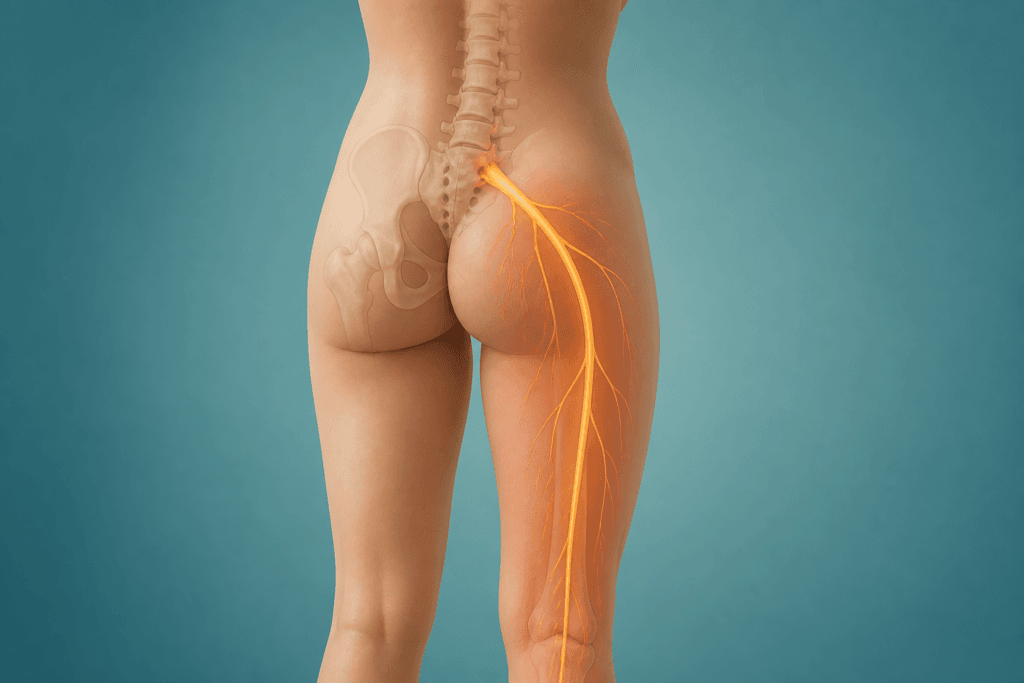
Back pain is common, but it is not one single condition. Some people experience a localised ache or stiffness, while others have pain that travels from the lower back or buttock into the leg. That radiating pattern is often described as sciatica.
This guide explains the difference between back pain and sciatica, sensible self-care, warning signs that need urgent medical attention, and where acupuncture may fit alongside conventional healthcare.
What is sciatica?
Sciatica is a term used for symptoms caused by irritation or compression of a nerve root in the lower back. Symptoms may travel along the sciatic nerve pathway through the buttock and down the back or side of one leg. They can include:
- shooting, burning or electric-shock-like leg pain
- pins and needles or numbness
- pain that feels worse when sitting, bending, coughing or sneezing
- weakness in part of the leg or foot
A herniated disc is one possible cause, although age-related changes and inflammation around a nerve can produce similar symptoms. Not every pain in the buttock or leg is sciatica, so persistent or worsening symptoms deserve an appropriate clinical assessment.
Back pain and sciatica are not always the same
Non-specific lower-back pain is usually centred in the back and may involve muscles, joints and other sensitive tissues. Sciatica is distinguished by nerve-related symptoms that extend into the leg. It is possible to have both at the same time.
Imaging is not routinely required for every episode. The NICE guideline on low-back pain and sciatica advises that imaging in specialist care should generally be considered only when the result is likely to change management.
What can you do during a flare-up?
Advice should be tailored to the individual, but prolonged bed rest is rarely helpful. NHS guidance commonly encourages people to keep moving within comfortable limits, change position regularly and gradually return to normal activity.
- Keep gently active: short, regular walks may be easier than one long walk.
- Pace your day: alternate more demanding tasks with lighter activities.
- Avoid staying in one position: change between sitting, standing and walking.
- Use heat or cold if helpful: protect the skin and keep applications brief.
- Ask about medication: speak to a pharmacist or GP about what is suitable for you, particularly if you take other medicines or have another health condition.
- Build exercise gradually: a physiotherapist or other qualified professional can help when you are uncertain what to do.
Many cases improve with time, but recovery varies. Seek medical advice if the pain is severe, is getting worse, follows significant trauma, is accompanied by fever or unexplained weight loss, or is not beginning to settle.
When back pain or sciatica needs urgent attention
Go to your nearest emergency department immediately if back or leg pain is accompanied by new difficulty controlling or passing urine or stool, altered sensation around the genitals or saddle area, rapidly worsening weakness, or severe symptoms affecting both legs. These can be warning signs of cauda equina syndrome, a rare spinal emergency.
For additional patient guidance, see the Cambridge University Hospitals sciatica information.
Where does acupuncture fit?
Some people with back pain or sciatica choose acupuncture as a complementary approach. A first appointment normally includes a discussion of symptoms, health history, medication and how the problem affects everyday activity. If treatment is considered appropriate, a practitioner may use fine, sterile, single-use needles at individually selected points.
The evidence is debated and recommendations differ. The current NICE guideline says acupuncture should not be offered within the NHS for managing low-back pain with or without sciatica. The British Acupuncture Council back-pain factsheet discusses acupuncture research and its limitations. We encourage patients to review the evidence, ask questions and make an informed choice.
Acupuncture is not a substitute for diagnosis or urgent medical care. Individual responses vary, and no practitioner can promise a particular result. If you are already receiving treatment, keep your GP, physiotherapist or consultant informed about any complementary care you use.
What happens at a Neijing appointment?
Your practitioner will ask about the location and character of your symptoms, when they began, aggravating or easing factors, sleep, activity and relevant medical history. They will also screen for signs that require referral. A treatment plan is then discussed with you, including expected appointment length, fees and when progress will be reviewed.
Our practitioners are trained to work within their professional scope and use sterile, single-use needles. Depending on the practitioner and your preferences, an appointment may also include massage, cupping, moxibustion or lifestyle advice where appropriate.
Choosing the right next step
If your symptoms are new, severe, changing or worrying, begin with a medical assessment. If you have already been assessed and are considering complementary care, you can discuss your circumstances with a qualified practitioner before deciding whether to book.
Neijing Acupuncture offers appointments across our UK and Mallorca clinics. View our treatments and clinic information, or contact us to ask which practitioner may be suitable.
This article provides general information and is not individual medical advice. If you are concerned about your symptoms, consult an appropriate healthcare professional.