
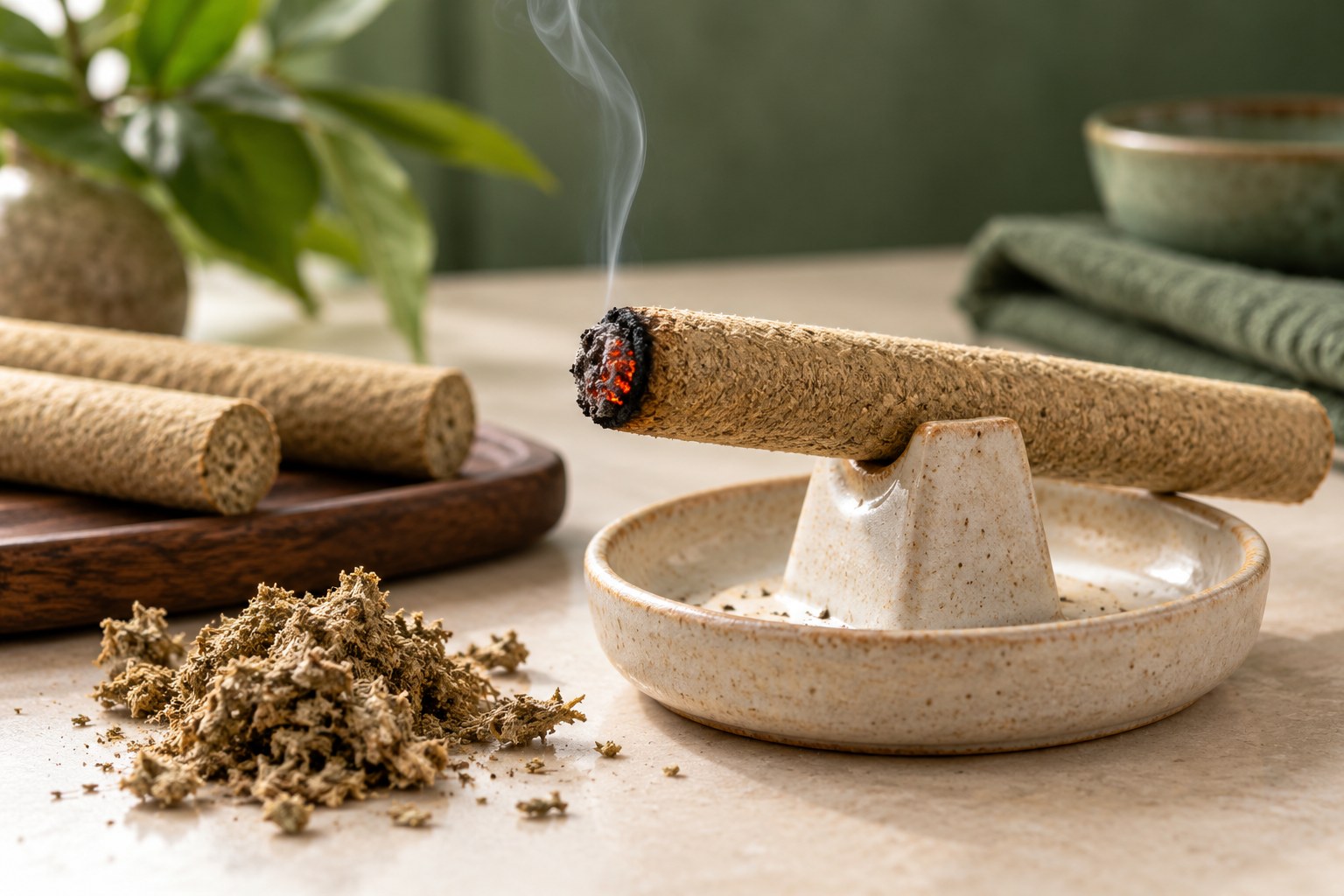
If you have seen a practitioner mention moxa, you may wonder what moxibustion is used for and how it relates to acupuncture. It is a traditional heat-based technique. Its name describes a method, rather than one diagnosis or a single proven medical benefit.
A useful explanation separates three questions: what the practitioner would do, why they propose doing it, and what evidence supports that particular aim. People using a technique for many years does not settle every question about its effectiveness or safety. This guide helps you prepare for that conversation without providing instructions for trying moxa yourself.
How do acupuncture and moxibustion differ?
The British Acupuncture Council’s scope statement describes moxibustion as burning mugwort on or near the skin to stimulate acupuncture points. An acupuncture needle provides a different kind of stimulation: it is a fine, solid needle inserted into the body. Moxa applies heat rather than describing a needling technique.
An acupuncturist may discuss moxibustion alongside acupuncture, but you should understand each proposed method separately. Ask whether the appointment would involve needles, moxa or both, and why each is being suggested. Agreeing to a consultation does not mean agreeing to every available technique.
What are direct and indirect moxibustion?
Cleveland Clinic’s explanation of the methods distinguishes direct moxibustion, where a moxa cone is placed on the skin, from indirect moxibustion, where burning moxa does not directly touch the body. Moxa may be prepared as a stick or a small cone.
Those names describe how heat is applied; they do not establish safety and effectiveness for a particular health problem. Ask which method is proposed, whether there will be skin contact, and how heat and smoke will be managed. A general reference to a “moxa stick” is not a complete explanation of the appointment.
This is background information, not a guide to performing moxibustion. You can take the explanation away and decide later, especially if you need to check it with another clinician.
How is moxa used in traditional Chinese medicine?
Within traditional Chinese medicine, moxa is used to warm selected areas and stimulate points. Traditional explanations may refer to qi and meridians. The BAcC describes this traditional framework as guiding the choice of needles or moxa. These concepts should not be presented as established anatomical structures or proof that a medical condition has been treated.
Ask how the explanation connects with your actual reason for attending. For example, “What change are you hoping we can review?” is more specific than accepting a broad statement about balancing the whole body.
There is also a distinction between someone feeling comfortable during an appointment and evidence that a condition has been treated. Both experiences can be discussed honestly, but one should not automatically be presented as proof of the other.
What does the evidence say about health conditions?
Researchers have investigated moxibustion for particular health conditions, including knee osteoarthritis symptoms and a baby’s breech presentation during pregnancy. Those are different research areas, with different participants, outcomes and safety considerations.
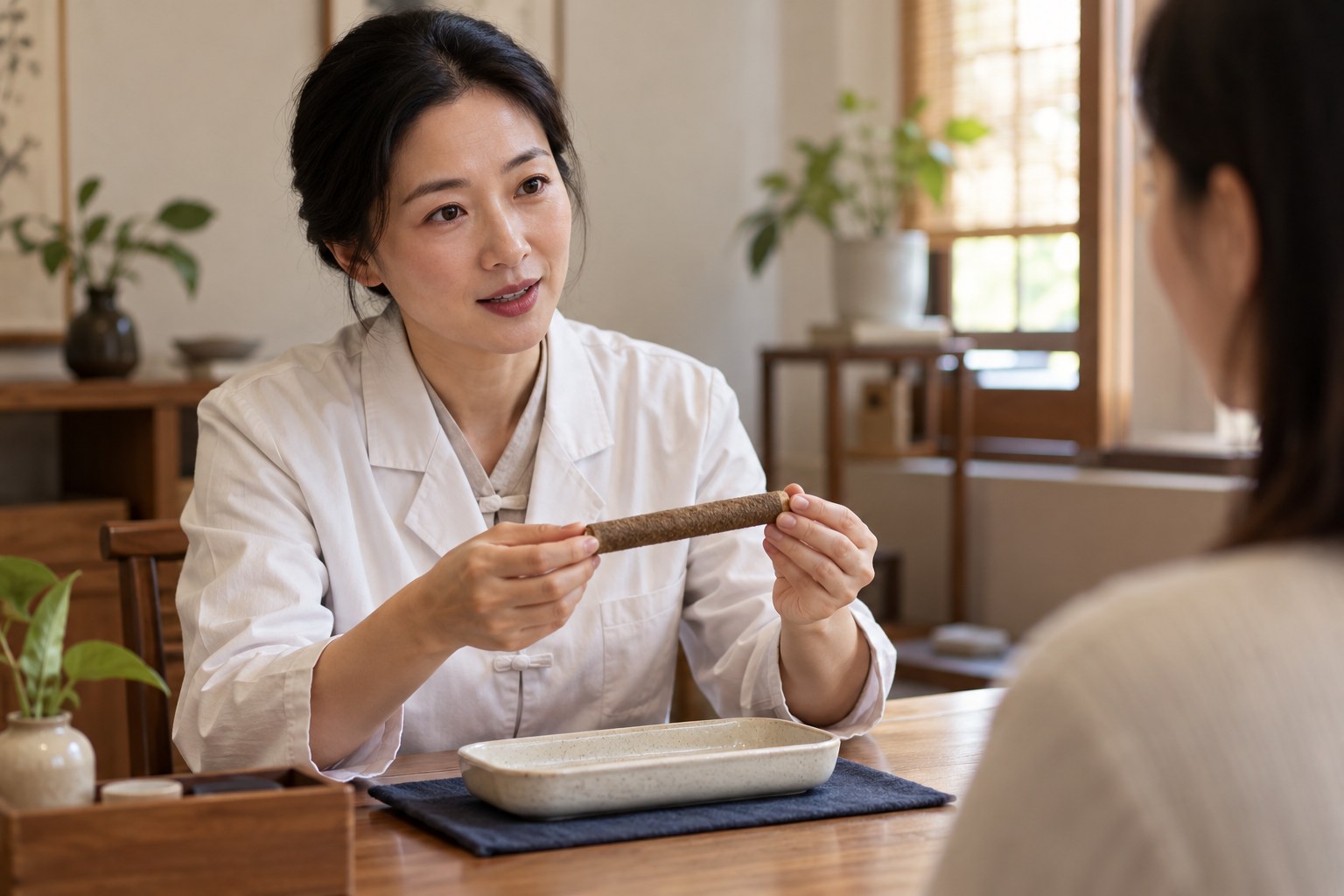
A 2014 sham-controlled trial involving 110 people with knee osteoarthritis reported greater improvements in pain with active moxibustion. Differences in physical function were not present at every follow-up point. It was a specific, relatively small trial of a particular approach, not a conclusion about every moxa technique or every kind of joint pain.
When reading a treatment list, ask whether each proposed use has evidence of its own. A finding about one joint condition does not establish a benefit for digestive symptoms, fertility or general immunity. Avoid treating an extensive list as stronger evidence simply because it is longer.
What does research on moxibustion for breech presentation show?
A Cochrane review published in 2023 assessed 13 studies involving 2,181 women and their babies. It found that moxibustion alongside usual care probably reduced non-head-down presentation at birth. It probably made little or no difference to caesarean birth rates, and adverse-event information was inadequately reported.
Those distinctions matter. A change in presentation is not the same outcome as avoiding a caesarean, and limited harm reporting cannot establish that a treatment is risk-free.
If you are pregnant, discuss any interest in moxa with your midwife or obstetrician. Decisions about suitability and your birth plan need that context. This article does not offer a point location, treatment schedule or home-use protocol, and a routine clinic enquiry should not delay assessment of a pregnancy concern.
What are the potential risks?
A systematic safety review published in 2010 identified reports of burns, allergic reactions, infections and smoke-related discomfort. Its varied reports could not establish how frequently adverse events occur. It should not be presented as a modern risk calculator.
This is a reason to ask about the proposed method and precautions, rather than accept a blanket claim of safety. Tell the practitioner about relevant health problems, sensitivities, allergies, medicines and other treatment so these can be considered before a decision.
If smoke worries you, raise that concern before booking. Ask whether the proposed setting can accommodate your needs. Neither a familiar smell nor a product described as natural guarantees suitability, and burning moxa should not be treated as a risk-free form of heat therapy.
What should you ask the acupuncturist before booking?
Find out who would provide the treatment and what relevant training they have in the proposed technique. You can begin with Neijing’s practitioner information, then confirm the details with the individual acupuncturist. Experience with needling alone does not answer your questions about their moxa training.
Ask how consent will be obtained and how your comfort will be checked while receiving moxibustion. It should be clear whom to tell if the sensation becomes unpleasant and how the procedure can be stopped.
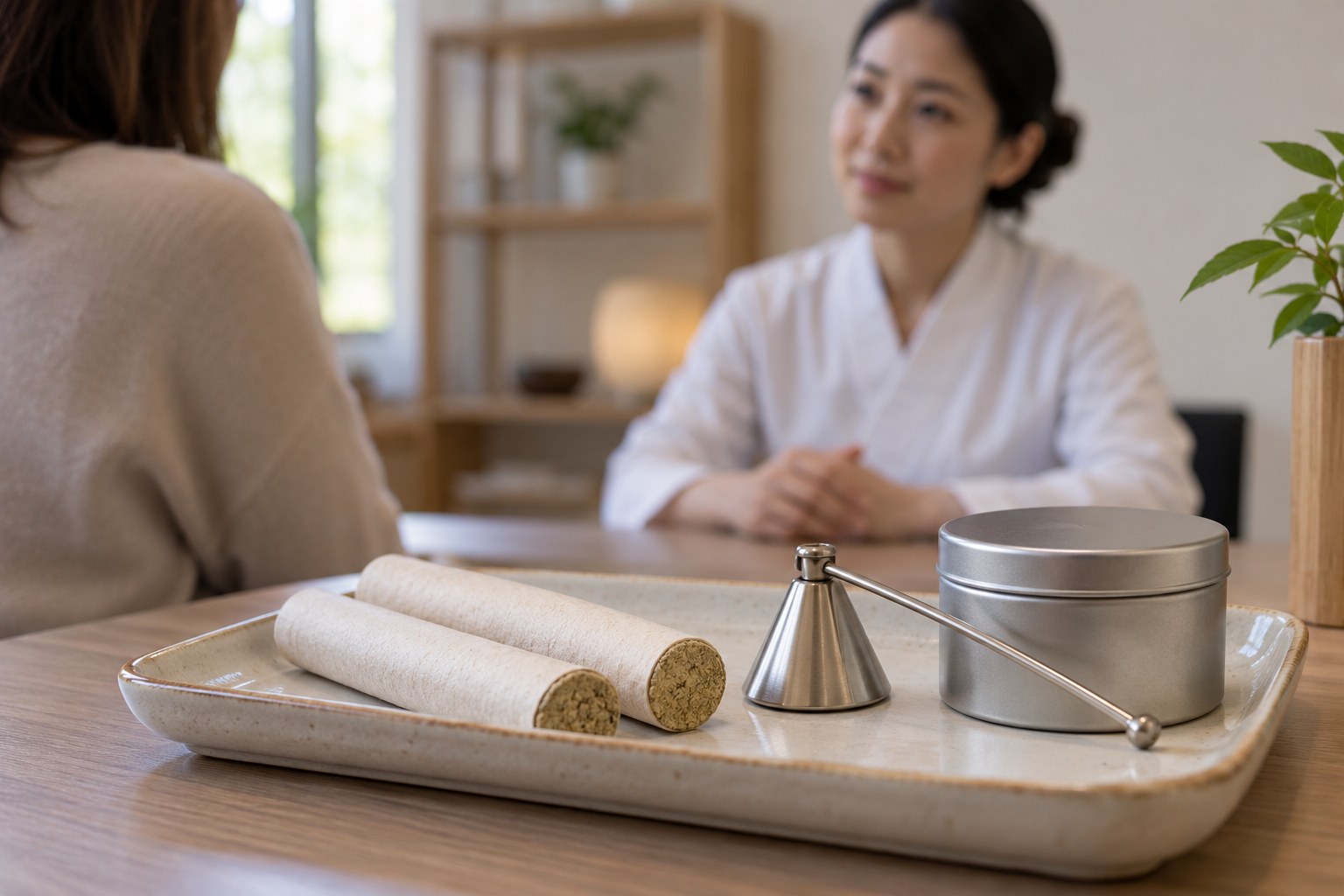
Consider practical access too. If you need help positioning yourself, want a support person or have a communication requirement, discuss it early. These are ordinary appointment questions that help you judge whether the proposed arrangements fit your needs.
How can you prepare for a useful consultation?
Before an assessment, write down the main reason you are considering treatment. Include whether the problem has already been assessed and what care is in progress. A concise description is enough; you do not need to adopt a traditional diagnosis before attending.
For example, someone with an assessed knee problem may be uncertain about references to warmth and circulation. They could ask what the proposed goal is, which evidence applies to their diagnosis and how treatment would fit with their existing plan.
Someone else may be curious after seeing moxa offered alongside acupuncture. They can request information without agreeing to a combined appointment or assuming that every listed technique is necessary.
What should a treatment review cover?
If treatment is considered after an appropriate assessment, agree what would be reviewed and when. Choose something meaningful to your daily life rather than relying on a vague promise to restore balance.
Ask how the review would account for unwanted effects, no change or other changes in care. A symptom that improves after an appointment may be useful information, but the timing alone does not prove why it changed.
Clarify the cost of the proposed appointment and any return visits. Ask whether moxa is included, optional or separately priced, without assuming that Neijing uses one arrangement across all clinics. Consider travel and time as part of the commitment.
What should you do about an unexpected reaction?
Tell the practitioner promptly about excessive heat, pain, irritation or feeling unwell during a session. Do not continue just because you believe discomfort must indicate a stronger effect. Ask for clear written instructions and a contact route before leaving.
If a burn occurs, NHS burns guidance recommends cool running water for 20 minutes and says not to burst blisters. Its page explains when emergency care or advice through NHS 111 is needed. A burn should not be dismissed as a sign that the treatment is working.
Keep your usual healthcare team involved when symptoms persist or change. For introductory appointment questions, read Neijing’s acupuncture FAQs. You can also contact Neijing to ask which practitioner offers the relevant method and whether a consultation is appropriate for your circumstances.
Sources
- British Acupuncture Council: The scope of practice for acupuncture
- Effectiveness of moxibustion treatment as adjunctive therapy in osteoarthritis of the knee, randomised placebo-controlled trial 2014
- Coyle, Smith and Peat: Moxibustion for turning a baby in breech position, Cochrane 2023
- Park and colleagues: Adverse events of moxibustion, systematic review 2010
- NHS: Burns and scalds, reviewed March 2026
- Cleveland Clinic: Moxibustion—direct and indirect method definitions, 2022
- British Acupuncture Council: About acupuncture—description of traditional practice