

A sore jaw on waking, a partner hearing grinding at night or noticing your teeth pressed together at your desk can prompt a search for acupuncture for jaw clenching. Before choosing treatment, separate the concerns: are you trying to change a clenching habit, protect your teeth, manage pain or understand a new symptom?
Those goals are related, but they are not interchangeable. Evidence that a treatment can temporarily ease a particular type of jaw pain does not establish that it stops teeth grinding. A useful care plan makes clear which problem is being addressed and keeps appropriate dental assessment in place.
How are jaw clenching, bruxism and TMJ pain related?
Bruxism describes clenching or grinding. It can happen while awake or asleep. Temporomandibular disorders, usually shortened to TMD, concern the jaw joints and jaw muscles. TMJ is the abbreviation for the temporomandibular joint itself. When reading about a TMJ disorder, ask which diagnosed problem the writer means; the label alone does not identify the source of pain.
The NHS overview of TMD describes symptoms including pain around the jaw, ear or temple, restricted opening and locking. These symptoms are not a reliable way to diagnose yourself.
Do not assume that every headache, click or painful tooth comes from one clenching problem. When speaking to a professional, start with what you actually notice. “My jaw feels stiff when I wake” gives a clearer starting point than deciding that you have damaged the joint.
Awake and sleep bruxism need different conversations
Daytime clenching may be something you begin noticing during concentration or a busy part of the day. Grinding during sleep may be reported by someone else, or considered when a dentist examines tooth wear.
Leeds Dental Institute’s bruxism guidance distinguishes an awake habit from sleep-related activity that is not under conscious control. Its advice includes reminders to relax the jaw during the day. This does not mean that someone can simply decide to stop grinding while asleep.
Tell your dentist which pattern you suspect, what prompted that suspicion and whether anyone has heard grinding. If you are unsure, say so. An uncertain but accurate history is more useful than trying to match yourself to an online symptom list.
Protecting teeth is a separate goal from easing pain
A dental assessment can help establish whether there is tooth damage, sensitivity or another problem needing attention. The NHS bruxism guide recommends seeing a dentist for grinding associated with tooth damage, sensitivity or jaw, face or ear pain.
A dentist may suggest a mouth guard or splint to protect teeth. An acupuncture appointment cannot establish that a painful tooth is sound or replace a device prescribed for tooth protection.
Ask your dentist what the proposed appliance is intended to do and how its fit will be checked. If you already use one, explain any discomfort or difficulty wearing it. Do not stop using it because your jaw feels better after another treatment without discussing the change.
How strong is the evidence for acupuncture for TMJ pain?
Research on the effectiveness of acupuncture for TMD often measures pain and jaw function, rather than the number of grinding episodes during sleep. That distinction matters when you encounter the phrase “acupuncture for bruxism”.
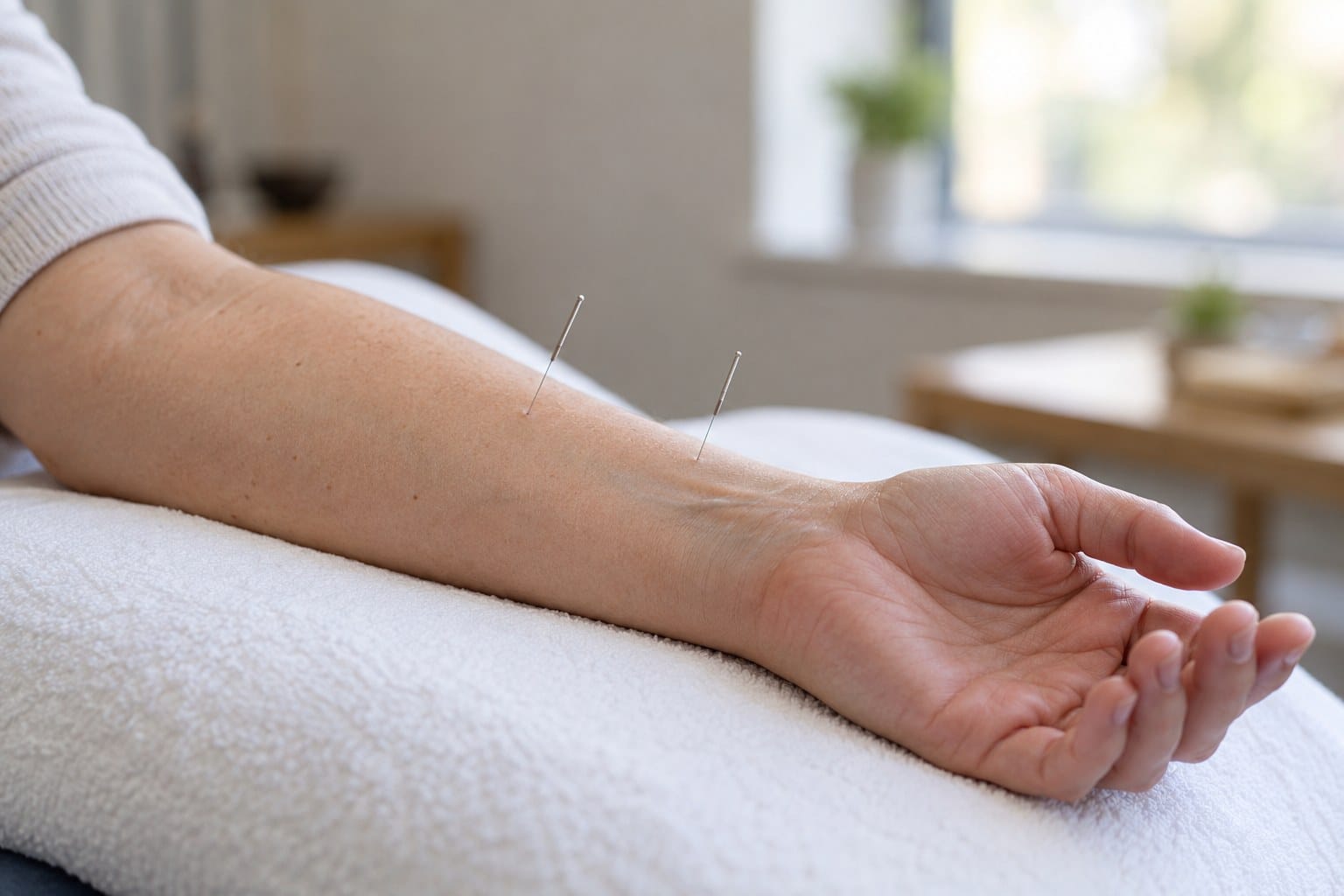
A 2024 randomised trial in QJM compared acupuncture with sham acupuncture in 60 adults with TMD. It reported greater pain reduction in the acupuncture group after a four-week course, with differences also recorded at eight weeks. This was a small study at one centre, with a limited follow-up period.
The trial offers information about the outcomes it measured. It does not establish that acupuncture stops sleep bruxism, prevents tooth fractures or produces a lasting result for everyone. Its treatment schedule should not be copied automatically into a private booking plan.
Keep possible pain relief in proportion
UK advertising guidance makes a similarly important distinction. ASA/CAP’s acupuncture guidance identifies a carefully qualified claim about temporary relief of TMD/TMJ pain as likely acceptable. That does not extend to curing bruxism or correcting the bite.
If acupuncture is discussed, ask which outcome is realistically being proposed. “We would review whether this particular pain changes” is a more specific proposal than “we will fix your clenching”.
You may value feeling relaxed during an appointment, but relaxation alone does not demonstrate that grinding has reduced. Keep the experience of a session and the condition you hoped to change separate when reviewing the plan.
How can you describe muscle tension and jaw movement?
Before an assessment, note when you first noticed the problem and whether it is mainly present on waking, during meals or at particular points in the day. Add any tooth sensitivity, broken dental work or restriction that you want checked.
Describe muscle tension separately from jaw movement. For example, “My jaw muscles feel tight at my desk” describes a sensation; “I struggle with the first bites of a meal” describes an activity. Share both observations with the clinician instead of deciding which tissue causes pain. If another symptom seems linked, such as neck pain, mention it without assuming one cause.
Avoid repeatedly checking your bite or testing how far you can open your mouth to produce a “better” record. The aim is a short account of ordinary experience that helps a professional understand what matters to you.
Agree everyday changes with the appropriate professional
A dentist may discuss daytime habits, sleep and factors that could be relevant to grinding. NHS advice includes avoiding gum and hard foods when tooth or jaw pain is present. Keep any suggestions specific to your assessment.
For an awake habit, a reminder can be incorporated into an existing routine. You might ask whether pausing during a normal work break to notice jaw tension would be useful. Choose something manageable rather than turning the whole day into a monitoring exercise.
Do not invent forceful jaw exercises or copy a manipulation from a video. If exercises are suggested, ask for a demonstration, clear instructions and an explanation of when to stop or request review.
How would acupuncture treatment fit around dental care?
A useful consultation should establish what you have already had assessed and what treatment is in progress. Bring relevant information from your dentist, including the purpose of any splint or planned investigation.

Ask about the practitioner’s relevant training, what they propose, possible unwanted effects and alternatives. You can read Neijing’s practitioner information before making an enquiry, then ask the individual practitioner about their experience.
Also clarify whether the appointment concerns pain management, general wellbeing or another clearly explained goal. These details help prevent an enjoyable complementary appointment from being mistaken for a dental diagnosis or a promise to protect your teeth.
What should a treatment plan and review include?
Agree a review point before committing to return visits. Start with the problem already assessed, the outcome being discussed and one ordinary activity affected by it. The question might be whether pain makes a meal difficult, rather than whether every sign of grinding has disappeared.
Consider a person with diagnosed TMD, discomfort around the jaw joint and concern about tooth wear. Their treatment plan could keep three questions separate: is eating more comfortable, is ordinary movement less restricted, and what does the dentist find at review? Improvement in one answer does not establish the others. If acupuncture is being considered as a treatment option for temporary TMJ pain relief, pain and function can inform the discussion while tooth protection continues to need its own review.
Before agreeing to acupuncture sessions, ask how many appointments are proposed before the first review and what would lead to reviewing sooner. There is no need to turn the schedule used in a research trial into your own automatic booking commitment. The practitioner should explain the proposed arrangement for you.
Include unwanted effects and the practical burden of attendance when deciding whether to continue. If the pain score changes but an important activity remains difficult, mention both findings. If nothing changes, ask whether the approach should be adjusted, stopped or assessed by another professional.
Keep the starting description and review question brief enough to use. You might write, “We are reviewing discomfort during meals; my dentist remains responsible for checking my teeth and appliance.” This is an example of separating goals, not a prescribed course or a guarantee of benefit.
Check current fees and cancellation terms at the chosen location. A clear review point and an honest explanation of uncertainty make the commitment easier to assess without requiring you to predict the outcome in advance.
Know when jaw symptoms need prompt help
Seek urgent medical advice for jaw locking or difficulty opening, inability to eat or drink, or concerning head or scalp pain and visual symptoms. The NHS TMD page explains warning signs and the urgent GP/NHS 111 route.
Do not wait for a routine complementary appointment to assess a new or worsening problem. Explain what happened and any recent treatment when contacting the relevant clinician.
For introductory appointment questions, see Neijing’s acupuncture FAQs. To discuss whether a consultation about an already assessed jaw-pain concern would be appropriate, contact Neijing. Keep your dentist involved in decisions about teeth, appliances and ongoing dental care.