
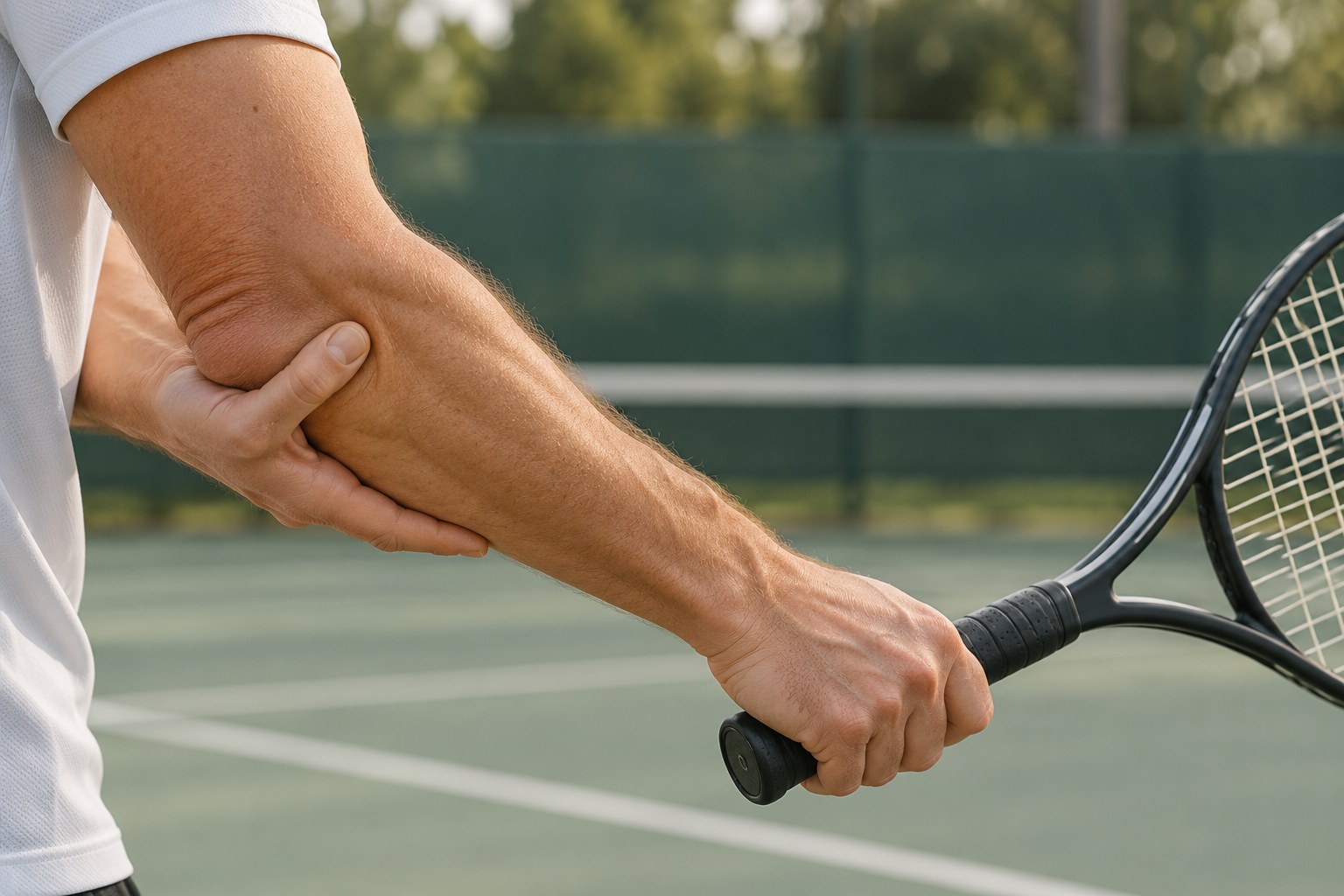
Pain when lifting a kettle, using a screwdriver or picking up a racket can make ordinary activities frustrating. If you are considering acupuncture for tennis elbow, start with two questions: has the cause of the pain been assessed, and what would you like treatment to help you do?
Acupuncture research offers some evidence of improvements in pain or function in particular study settings. That does not establish a guaranteed result, repair of a tendon or a predictable return-to-sport date. A useful decision combines an accurate assessment, realistic evidence and a plan for the activities that matter to you.
Tennis elbow is not limited to tennis players
Tennis elbow usually involves pain around the outside of the elbow. Gripping, lifting or moving the wrist may aggravate it. Repetitive work and household tasks can be relevant as well as sport, as the NHS tennis elbow guide explains.
The location is useful information, but it does not establish a diagnosis by itself. Pain elsewhere in the arm, a recent injury or altered sensation may need a different explanation. Tell the assessing professional what happened rather than assuming every painful elbow is the same problem.
Think about the beginning of the symptoms. Was there a distinct incident, a new task or a gradual change? “It hurts when I carry a full bag” gives more practical information than repeatedly pressing the sore area to see whether it still hurts.
Know when an arm problem needs urgent assessment
Get urgent help for severe arm pain with difficulty moving, an injury with a snap or change in shape, or numbness and tingling. A swollen arm with fever or feeling shivery needs NHS 111 advice. Sudden arm pain with chest pressure, heaviness or squeezing requires 999. The NHS elbow and arm pain page explains these routes.
Do not book a routine acupuncture appointment to investigate those symptoms. If the situation does not feel like your usual elbow problem, describe the change when seeking help.
For persistent symptoms without an emergency, arrange an appropriate assessment rather than extending self-treatment indefinitely. The NHS tennis elbow guide recommends a GP review if symptoms continue despite an initial period of rest and self-care.
What does acupuncture research suggest?
A 2020 international randomised trial studied 96 adults with chronic lateral elbow pain. Manual acupuncture was compared with sham laser. At the three-week follow-up, the acupuncture group had better results on an arm-disability questionnaire and some pain measures.
The comparison matters: sham laser is not the same as sham needling, exercise or usual physiotherapy. The short follow-up also leaves questions about lasting benefit. A positive study result is useful evidence, but it cannot predict an individual outcome or establish that every acupuncture approach works equally well.
An earlier small trial compared real and sham acupuncture. Early results favoured real acupuncture, but by two months the between-group differences in pain and strength were no longer statistically significant, although arm function remained better.
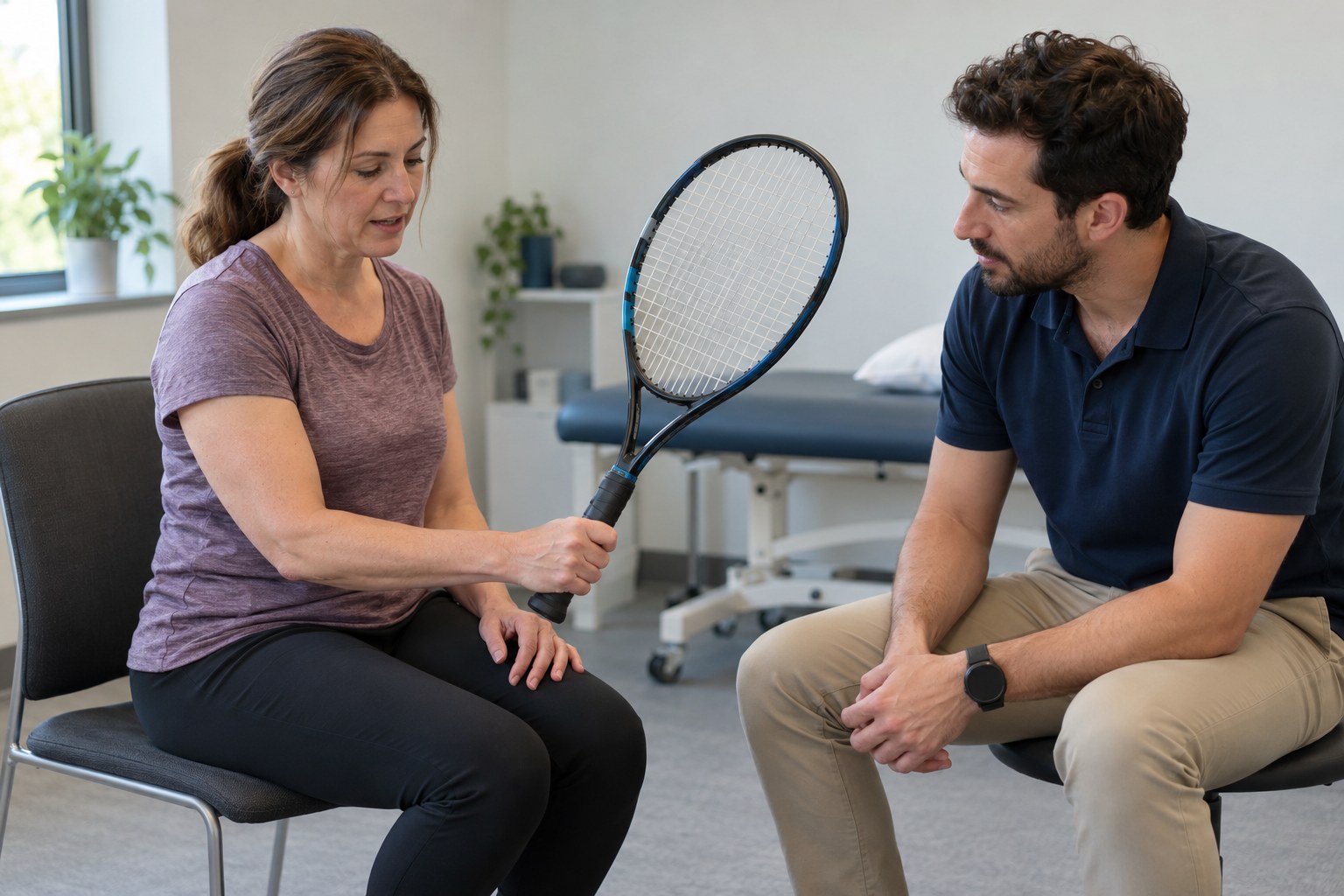
Together, these examples show why the outcome measured and timing of review matter. They support a careful discussion of potential symptom or function changes, rather than a promise that acupuncture cures tennis elbow.
Pain relief and readiness for activity are different goals
Imagine being more comfortable at rest but still struggling to carry equipment through a working day. Alternatively, you might complete a short task more easily while still noticing soreness afterwards. Those are different patterns, and both deserve an honest description.
Choose a goal that connects with daily life: preparing dinner, doing a particular work task or returning to a hobby. Ask your clinician what would indicate progress towards that goal and what should trigger another assessment.
Feeling less pain after any treatment does not automatically establish readiness for a sudden increase in activity. Ask how the symptom-management plan connects with the rehabilitation advice you have been given. You should not have to guess whether one practitioner’s instructions conflict with another’s.
Look at the whole task, not just the painful movement
Before a consultation, identify a few activities that are difficult. Note what you carry, how you grip it, how long the task lasts and whether you can change its organisation. You do not need to reproduce pain to make the record convincing.
For example, a home project might involve several different jobs that all load the same arm. Calling it “light DIY” could hide the amount of gripping involved. Equally, someone returning to a racket sport may have changed both playing time and equipment.
Bring those details to the professional advising your rehabilitation. Ask about realistic adjustments rather than designing an elaborate programme yourself. Where work is involved, occupational health or a manager may be able to discuss temporary changes to tasks.
Keep physiotherapy and activity advice in the picture
The NHS describes reducing activities that aggravate symptoms and considering physiotherapy when the problem persists. Appropriate exercises and other options can be discussed following assessment. Some areas allow direct access to NHS musculoskeletal services.
If you already have exercises, bring the instructions to the consultation. Explain whether you understand them, can fit them into your routine and know how to respond if symptoms change. Ask the prescribing professional to clarify anything uncertain.
This article does not provide a universal strengthening schedule. The starting point, progression and suitability need individual advice. An online list of repetitions cannot account for your symptoms, other health conditions or the demands of your job.
Discuss other options without adding everything at once
You may encounter advice about straps, braces, pain relief and different hands-on treatments. Ask a pharmacist or relevant clinician about suitability rather than assuming an option is appropriate because it is widely sold.
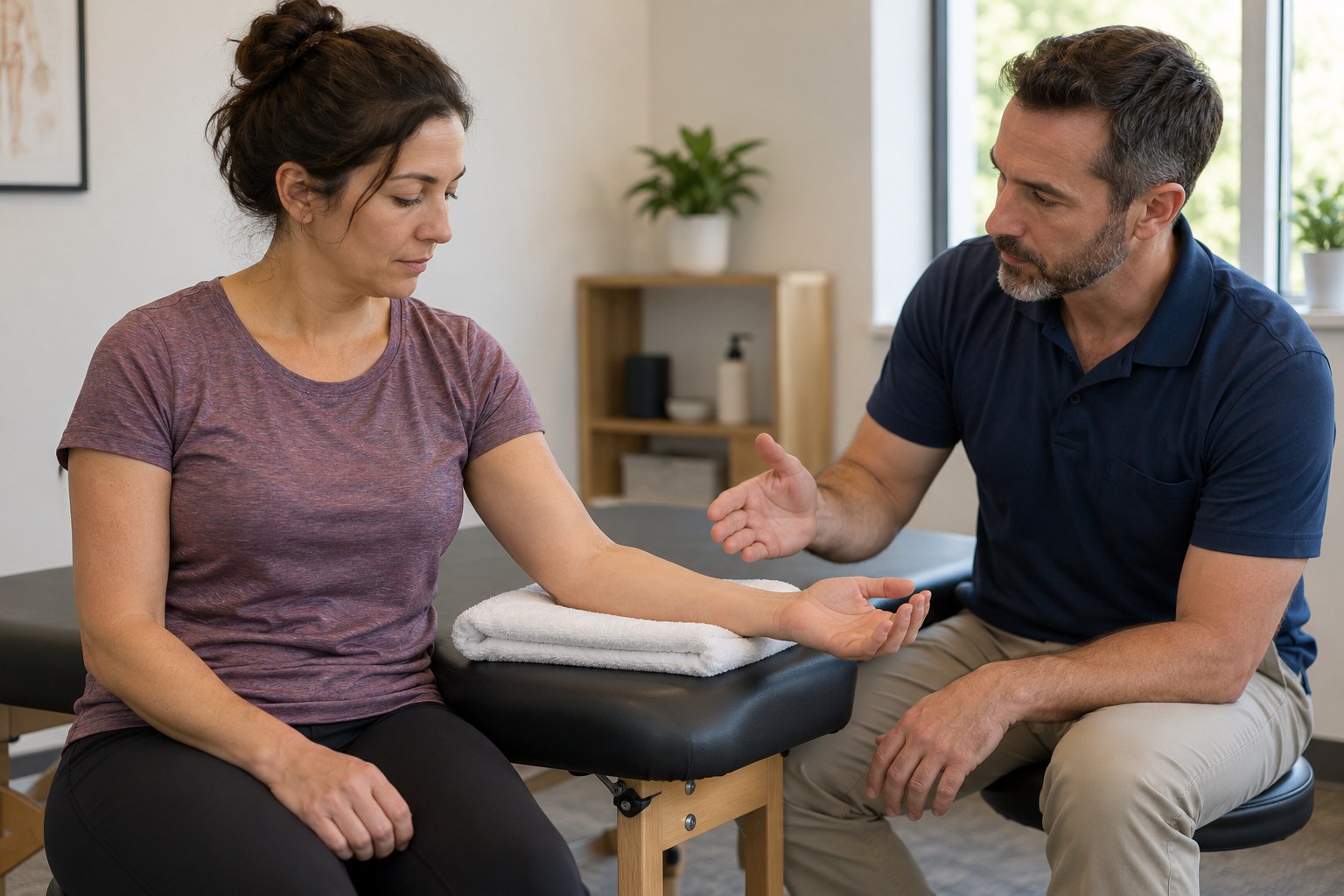
If several changes are being considered, discuss how they fit together. Buying equipment, changing exercises and starting multiple appointments simultaneously can make the plan expensive and difficult to review.
A short written summary can help: what each part is intended to do, who is overseeing it and when to ask for help. You do not need to prove which element caused every change, but you should understand why each one is included.
Ask what the acupuncture appointment would involve
Read Neijing’s practitioner information, then ask about the individual practitioner’s relevant experience. Describe any assessment, rehabilitation plan, medicines and other health issues before treatment is proposed.
Bring any existing referral letters or investigation results, if available, so the consultation can build on previous assessment rather than rely entirely on memory.
Ask what approach is suggested, which outcomes it targets, possible unwanted effects and alternatives. Clarify whether the proposal is acupuncture or dry needling; the labels and professional backgrounds can overlap, and the actual technique and consent discussion matter.
You can decline a proposed technique or ask for the session to stop. Practical questions about appointments are covered in Neijing’s acupuncture FAQs. Check current fees and arrangements directly with the clinic you choose.
Set a review point before committing to more visits
Choose a small number of useful observations rather than testing the arm repeatedly. You might describe how one ordinary task feels and whether you can complete it within the activity advice already agreed with your clinician.
At review, include unwanted effects, the time and cost of attendance, and any change in other treatment or workload. Ask whether continuing is justified and what would lead to stopping or seeking another opinion.
A research trial’s appointment schedule is not automatically the right course for you. Neither an immediate change nor a disappointing first appointment settles every question. What matters is a clear, proportionate plan that can be adjusted openly.
If your elbow problem has been assessed and you want to discuss an additional consultation, contact Neijing. Explain your goals and existing care so that the suitability discussion starts with your actual circumstances.
Sources
- NHS: Tennis elbow
- NHS: Elbow and arm pain
- Gadau and colleagues: A multi-center international study of acupuncture for lateral elbow pain—results of a randomized controlled trial, European Journal of Pain 2020
- Fink and colleagues: Acupuncture in chronic epicondylitis: a randomized controlled trial, Rheumatology 2002